

A few months ago, some Mormon missionaries came to my house. It had been years since I had spent any serious time working through Mormon doctrine, so I knew I was a little rusty. I invited them in, not out of curiosity about joining, but because I wanted to ask questions and refresh my understanding.
The conversation did not go well. Not because it was aggressive, but because it became clear fairly quickly that they were not interested in any deep theological discussion. I worked with what I could, answered where appropriate, and presented the biblical alternative as clearly as I was able. That did not last long. When I pressed with direct questions about God, Christ, authority, and the purpose of the cross, the responses remained vague and rehearsed. Definitions were avoided. Depth was resisted. After they left, it became clear that the issue was not simply that I was rusty. The issue is that missionary conversations are intentionally shallow. If you want to understand Mormonism, you have to go to its own doctrinal sources.
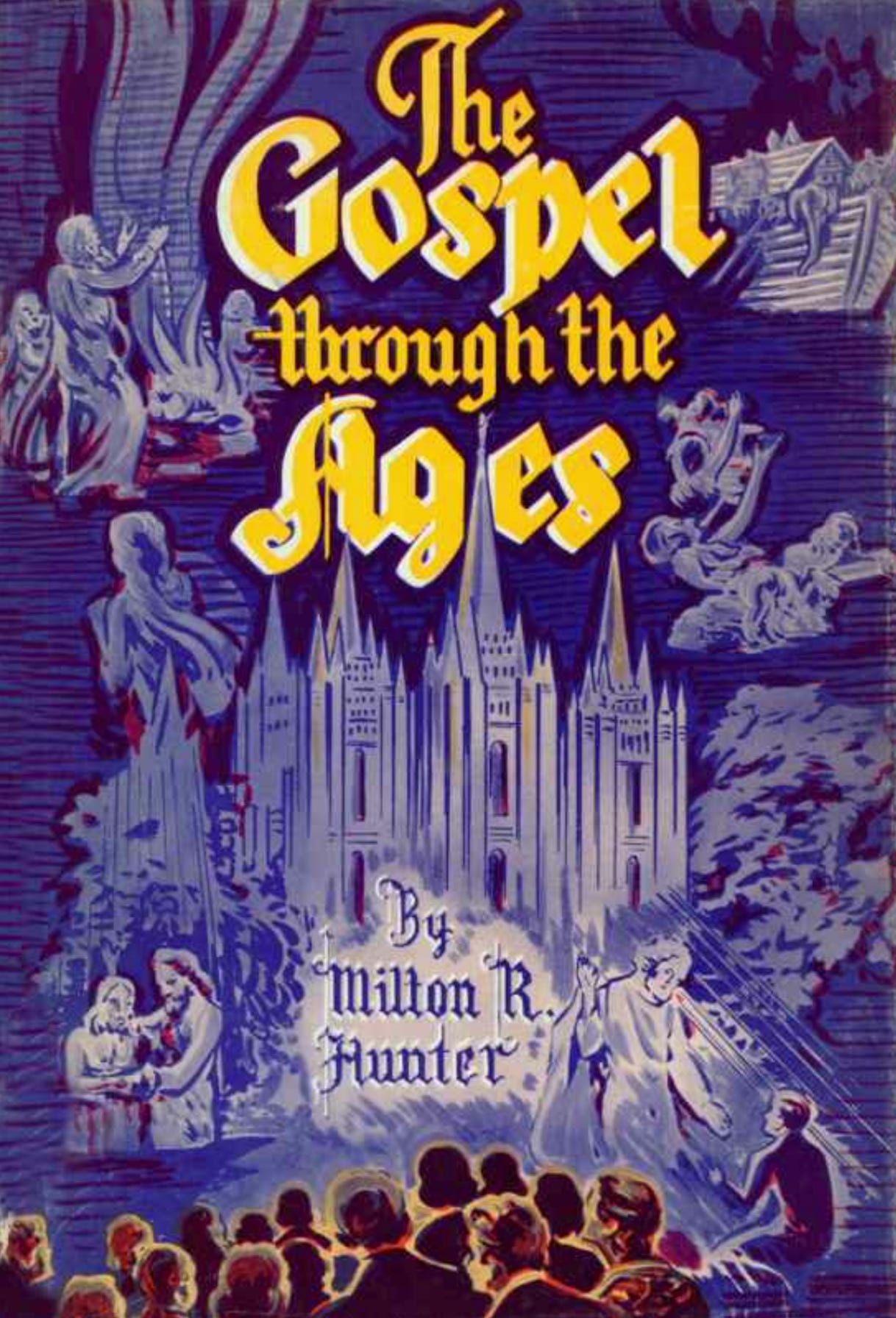
That sent me back into Logos, where I began pulling some of the standard critical works written against Mormonism. In the middle of that search, I came across a reference to a book I had never seen before, The Gospel Through the Ages by Milton R. Hunter. That book turned out to be exactly what I needed. Hunter was not an outsider or a speculative writer. He was a general authority in the LDS Church, and the book was produced under official church oversight. This is not a Christian critique of Mormonism. It is Mormonism explaining itself.
That is what makes the book so valuable.
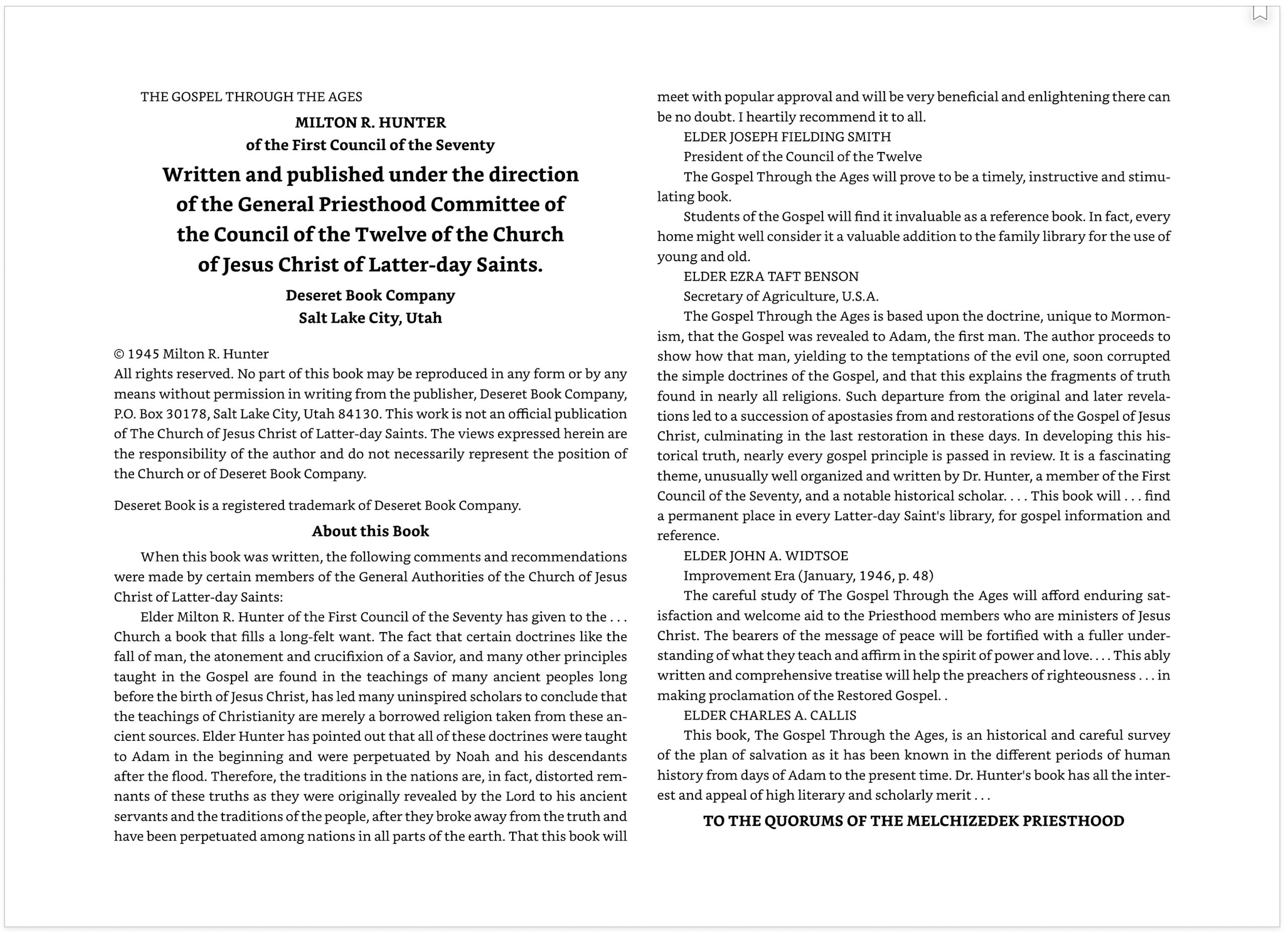
The Gospel Through the Ages presents Mormon theology in a clear, systematic, and historical way. It does not hide distinctive doctrines behind sentimental language or missionary slogans. It lays out the worldview plainly. If someone wants to understand what Mormonism actually teaches, rather than what it sounds like in a brief doorstep conversation, this book gets straight to the point.
One of the core teachings Hunter presents is the idea of a pre mortal existence. According to Mormon doctrine, all human beings lived as spirit children before coming to earth. We existed as conscious souls in the presence of God, who himself is an exalted man with a physical body. In that pre mortal realm, God convened a great council. The purpose of that council was to present a plan by which his spirit children could come to earth, receive physical bodies, and progress toward godhood.
At that council, two competing plans were offered. Jesus presented a plan that involved human freedom, moral testing, and the possibility of failure. Satan offered an alternative plan. His proposal guaranteed that every soul would succeed, that no one would be lost, and that all would be exalted. The cost of that guarantee was the loss of human free will. According to Mormon teaching, God rejected Satan’s plan because it violated human agency, even though it would have ensured universal exaltation. Satan rebelled, was cast out, and became the adversary.
This council narrative is foundational to Mormon theology, and it is assumed throughout Hunter’s book. It explains why salvation in Mormonism is not primarily about guilt before a holy God. The problem, in this system, is not sin in the biblical sense. The problem is progression. Earth life is a test, not a rescue mission. Failure is expected. Redemption is partial. Advancement continues after death.
Mormon doctrine also teaches that when souls came into mortal bodies, they experienced what is called spiritual death, which included the complete loss of memory of their pre mortal existence. This is why humans do not remember living with God before birth. Earth life is therefore a kind of amnesia test. We are judged on how we choose without remembering what we once knew.
Once this framework is in place, everything else follows. God is not eternal in the biblical sense. He progressed to godhood. Jesus is not the eternal Son who shares the divine essence with the Father. He is the firstborn spirit child who advanced further than the rest. The cross is not the decisive satisfaction of divine justice. It guarantees resurrection and makes forgiveness possible, but salvation itself depends on obedience, ordinances, and continued progression.
Hunter’s book makes these things clear. It does not try to fit Mormonism into historic Christian categories. It replaces them. Christ becomes an example rather than the eternal Redeemer. Grace becomes assistance rather than sufficiency.
That is why The Gospel Through the Ages is such an important resource for Christians who want to engage Mormons seriously. Missionary conversations often rely on shared vocabulary that hides massive theological differences. Hunter removes that ambiguity. He shows that Mormonism is not Christianity with extra scriptures. It is a different religion built on a different story of reality.
I highly recommend this book to pastors, elders, and thoughtful Christians who want to understand Mormonism well enough to engage it clearly and honestly. Not to caricature it. Not to mock it. But to see it as it truly is, so that when the next missionaries come to your door, you are not responding to a surface presentation, but to the actual system underneath it.